


As a seasoned supplier in the boom lift industry, I often get asked the question: "Can I install boom lift accessories myself?" It's a valid query, especially for those looking to save on costs or take a hands - on approach to equipment maintenance. In this blog, I'll delve into the intricacies of self - installing boom lift accessories, weighing the pros and cons, and providing some essential guidelines.
Understanding Boom Lift Accessories
Before we discuss self - installation, it's crucial to understand what boom lift accessories are. These are additional components that enhance the functionality, safety, or efficiency of a boom lift. Common accessories include work platforms with different sizes and configurations, tool trays, winches, and safety cages. Each accessory is designed to meet specific job requirements, whether it's for construction, maintenance, or tree trimming.
The Appeal of Self - Installation
One of the main reasons people consider self - installing boom lift accessories is cost - savings. Hiring a professional installer can be expensive, especially for smaller projects. By doing it yourself, you can avoid labor costs and potentially save a significant amount of money. Additionally, self - installation allows you to have more control over the process. You can work at your own pace, make adjustments as needed, and gain a better understanding of your equipment.
Another advantage is the convenience. If you need to install an accessory urgently, waiting for a professional installer might not be an option. Self - installation gives you the flexibility to get the job done when you need it.
The Risks of Self - Installation
However, self - installation is not without its risks. First and foremost, safety is a major concern. Boom lifts are complex pieces of equipment, and improper installation of accessories can lead to serious accidents. For example, if a work platform is not installed correctly, it could become unstable, putting the operator at risk of falling.
Secondly, self - installation might void the warranty of your boom lift. Most manufacturers have specific installation guidelines, and if you deviate from them, you could lose the protection provided by the warranty. This means that if something goes wrong with the accessory or the boom lift itself, you'll have to bear the cost of repairs.
Factors to Consider Before Self - Installation
Technical Knowledge
Installing boom lift accessories requires a certain level of technical knowledge. You need to understand the mechanical and electrical systems of the boom lift, as well as how the accessory integrates with the existing equipment. If you're not familiar with these concepts, it's best to seek professional help.
Tools and Equipment
You'll also need the right tools and equipment for the job. This includes wrenches, screwdrivers, and possibly specialized tools depending on the accessory. Using the wrong tools can damage the accessory or the boom lift, and it can also make the installation process more difficult.
Manufacturer's Guidelines
Always refer to the manufacturer's guidelines before attempting self - installation. These guidelines provide detailed instructions on how to install the accessory safely and correctly. Ignoring these instructions can lead to installation errors and safety hazards.

Types of Boom Lifts and Their Accessories
Let's take a look at some common types of boom lifts and the accessories that are typically associated with them.
Articulating Lifts
Articulating Lifts are known for their flexibility. They have multiple joints that allow the boom to reach around obstacles. Accessories for articulating lifts might include extendable work platforms to increase the working area, or specialized tool holders for easy access to tools.
50ft Towable Boom Lift
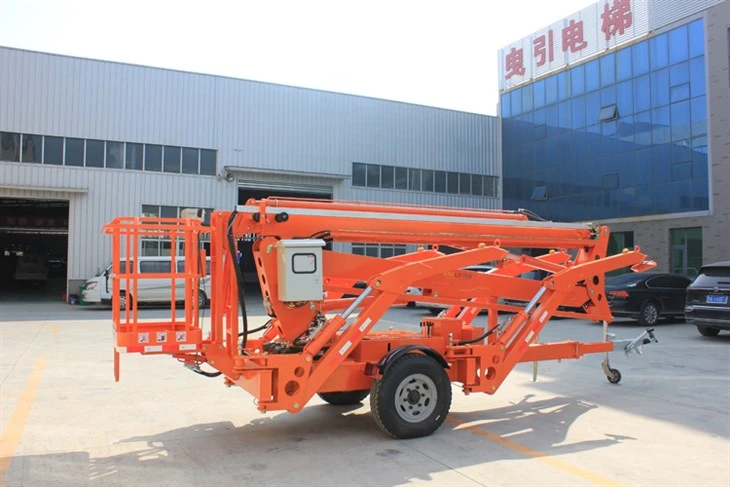
The 50ft Towable Boom Lift is a popular choice for smaller projects. It can be easily towed to different job sites. Accessories for this type of boom lift could include stabilizing jacks to ensure stability during operation, or a winch for lifting heavy objects.
Small Boom Lift
Small Boom Lift are ideal for indoor or confined spaces. They are compact and easy to maneuver. Accessories for small boom lifts might include a safety cage to protect the operator, or a tool tray to keep tools organized.
Track Crawler Spider Boom Lift
The Track Crawler Spider Boom Lift is designed for rough terrain. It has tracks that provide better traction. Accessories for this type of boom lift could include mud guards to protect the tracks, or a weather enclosure to keep the operator comfortable in different weather conditions.
Indoor Boom Lift
Indoor Boom Lift are used in warehouses, factories, and other indoor environments. They are typically electric - powered to reduce emissions. Accessories for indoor boom lifts might include a dust collection system to keep the work area clean, or a noise - reducing kit to minimize disturbance.
Step - by - Step Guide for Self - Installation (If Appropriate)
If you've decided that self - installation is the right choice for you, here's a general step - by - step guide:
- Read the Manual: Thoroughly read the installation manual provided by the accessory manufacturer. Make sure you understand all the instructions and safety warnings.
- Gather Tools and Materials: Collect all the necessary tools and materials. Check that you have everything you need before you start the installation.
- Prepare the Boom Lift: Park the boom lift on a level surface and turn off the power. Make sure the boom is in a safe position and the brakes are engaged.
- Remove Existing Components (if necessary): If the accessory requires the removal of existing components, do so carefully. Keep track of all the parts and hardware.
- Install the Accessory: Follow the installation instructions step by step. Make sure all the connections are secure and the accessory is properly aligned.
- Test the Accessory: Once the installation is complete, test the accessory to make sure it's working properly. Check for any signs of instability or malfunction.
When to Seek Professional Help
Despite the potential benefits of self - installation, there are times when it's best to seek professional help. If you're not confident in your technical skills, or if the installation is complex, it's safer to hire a professional. Additionally, if the installation involves electrical or hydraulic systems, it's recommended that you have a qualified technician do the job.
Conclusion
In conclusion, self - installing boom lift accessories can be a viable option for some people, but it's not without risks. Before you decide to take on the task, carefully consider your technical knowledge, the tools and equipment you have, and the manufacturer's guidelines. If you're unsure, it's always better to seek professional help to ensure the safety and proper functioning of your boom lift.
If you're in the market for boom lifts or accessories, we're here to assist you. Our team of experts can provide you with the right advice and support for your specific needs. Whether you're looking for an Articulating Lifts, a 50ft Towable Boom Lift, a Small Boom Lift, a Track Crawler Spider Boom Lift, or an Indoor Boom Lift, we have a wide range of products to choose from. Contact us to start a procurement discussion and find the perfect solution for your business.
References
- Manufacturer's installation manuals for boom lift accessories
- Industry safety standards and guidelines for boom lift operation and installation


