


Can vertical lifts be used in airports?
Airports are bustling hubs of activity, with a constant flow of passengers, luggage, and aircraft. Efficient operations and safety are of utmost importance in these environments. One question that often arises is whether vertical lifts can be used in airports. As a supplier of vertical lifts, I am well - versed in the capabilities and potential applications of these machines in airport settings.
The Need for Vertical Lifts in Airports
Airports have a wide range of tasks that require access to elevated areas. For example, maintenance and repair work on airport buildings, such as terminal roofs, lighting fixtures, and ventilation systems, often demand workers to reach heights safely and efficiently. Additionally, during the construction or renovation of airport facilities, vertical lifts can play a crucial role in transporting workers and materials to different levels.
In the case of aircraft maintenance, vertical lifts can provide access to various parts of the aircraft, including the wings, fuselage, and tail. This allows technicians to perform inspections, repairs, and cleaning operations with ease. Moreover, when it comes to handling oversized cargo or equipment, vertical lifts can be used to lift and position these items at the appropriate height for loading and unloading.
Types of Vertical Lifts Suitable for Airports
There are several types of vertical lifts that can be used in airports, each with its own unique features and advantages.
Vertical Mast Lift
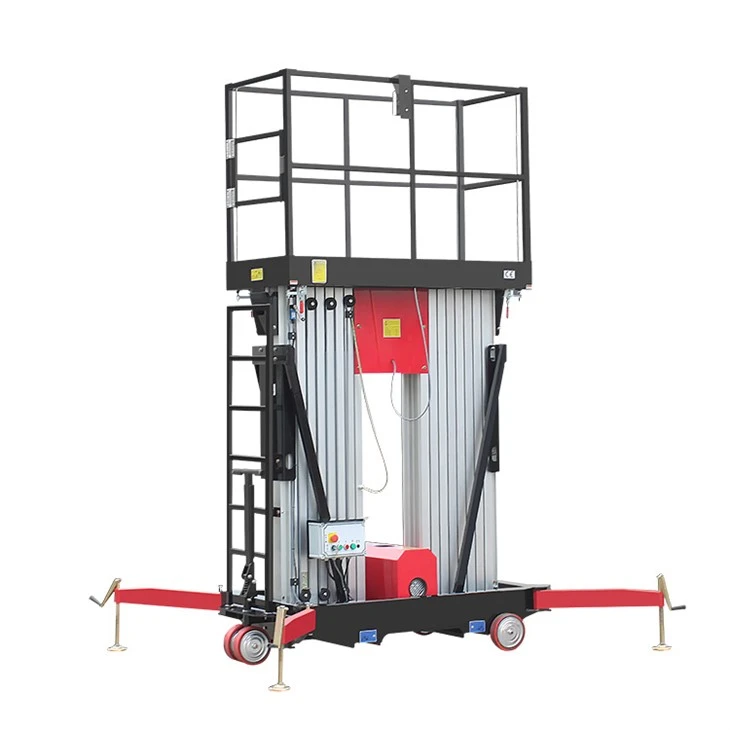
A Vertical Mast Lift is a compact and maneuverable option. It is ideal for indoor use in airport terminals, as it can fit through narrow doorways and operate in confined spaces. These lifts typically have a relatively small footprint, making them easy to store when not in use. They offer a stable platform for workers to perform tasks at heights, and some models come with adjustable platforms to provide better access to different areas.
Tracked Man Lift
Tracked Man Lifts are suitable for outdoor use in airports. Their tracked chassis allows them to traverse uneven terrain, such as runways and taxiways. This type of lift can be used for tasks like runway lighting maintenance, where access to different areas of the runway is required. The tracks provide good traction, ensuring the stability of the lift even on soft or slippery surfaces.
Mast Lifts
Mast Lifts are known for their high - reach capabilities. They can provide access to significant heights, making them suitable for tasks such as terminal building maintenance and aircraft hangar operations. Mast lifts are often designed with a telescopic mast, which can be extended to reach the desired height quickly and safely.
Advantages of Using Vertical Lifts in Airports
Safety
Safety is a top priority in airports. Vertical lifts are equipped with various safety features, such as guardrails, emergency stop buttons, and overload protection. These features ensure the well - being of workers operating at heights. For example, the guardrails prevent workers from accidentally falling off the platform, while the emergency stop button allows for immediate halting of the lift in case of an emergency.
Efficiency
Vertical lifts can significantly improve the efficiency of operations in airports. They can quickly transport workers and materials to the required height, reducing the time spent on manual labor and increasing productivity. For instance, instead of using ladders or scaffolding, which can be time - consuming to set up and dismantle, vertical lifts can be deployed and ready for use in a matter of minutes.
Versatility
As mentioned earlier, different types of vertical lifts can be used for a variety of tasks in airports. Whether it's indoor maintenance, outdoor runway work, or aircraft - related operations, there is a vertical lift suitable for the job. This versatility makes them a valuable asset for airport management.

Challenges and Considerations
While vertical lifts offer many benefits, there are also some challenges and considerations when using them in airports.
Space Constraints
Airports are often crowded places, and finding sufficient space to operate vertical lifts can be a challenge. In some cases, the layout of the terminal or runway may limit the movement of larger lifts. It is important to carefully plan the use of vertical lifts to ensure that they do not interfere with the normal flow of passengers and aircraft.
Noise and Emissions
Some vertical lifts, especially those powered by internal combustion engines, can produce noise and emissions. In an airport environment, where noise pollution can be a concern, it is advisable to choose electric - powered lifts. Electric lifts are quieter and produce zero emissions, making them more suitable for indoor use and areas with strict environmental regulations.
Training and Certification
Operators of vertical lifts need to be properly trained and certified. In airports, where safety is critical, it is essential that lift operators have the necessary skills and knowledge to operate the equipment safely. Regular training programs should be in place to ensure that operators are up - to - date with the latest safety procedures.
Conclusion
In conclusion, vertical lifts can be effectively used in airports. They offer a safe, efficient, and versatile solution for a wide range of tasks, from building maintenance to aircraft operations. By carefully considering the type of lift, the specific requirements of the airport, and the challenges involved, airport management can make the most of vertical lifts to enhance their operations.
If you are an airport operator or involved in airport construction and maintenance, and you are interested in learning more about our vertical lifts, we would be more than happy to discuss your specific needs. Contact us to start a conversation about how our vertical lifts can meet your requirements and improve the efficiency and safety of your airport operations.
References
- Industry standards and guidelines for vertical lift use in commercial and industrial settings
- Airport safety regulations and best practices
- Technical specifications of different types of vertical lifts


