


Yo! As a supplier of Indoor Boom Lifts, I've been getting a lot of questions about the communication systems on these bad boys. So, I thought I'd put together this blog to shed some light on the topic.
First off, let's talk about why communication is so important on indoor boom lifts. These machines are used in a variety of indoor settings, like warehouses, factories, and shopping malls. In these environments, there are often multiple workers and equipment moving around, so it's crucial that everyone stays in the loop. Good communication helps prevent accidents, ensures tasks are completed efficiently, and keeps the whole operation running smoothly.
Types of Communication Systems
1. Wired Communication Systems
Wired communication systems have been around for a while and are still widely used on indoor boom lifts. These systems use cables to transmit signals between different components of the lift, such as the control panel, sensors, and motors.
One of the main advantages of wired systems is their reliability. Since they're connected directly, there's less interference and signal loss compared to wireless systems. This means that the communication between different parts of the lift is more consistent, which is essential for safe and accurate operation.
However, wired systems also have some drawbacks. The cables can be cumbersome to install and maintain, and they're prone to damage, especially in a busy indoor environment. If a cable gets cut or damaged, it can disrupt the communication and potentially lead to safety issues.
2. Wireless Communication Systems
Wireless communication systems are becoming increasingly popular on indoor boom lifts. These systems use radio waves or Wi-Fi to transmit signals between different components.
The biggest advantage of wireless systems is their flexibility. There are no cables to worry about, which makes installation and maintenance a lot easier. Workers can also move around more freely without being restricted by cables.
Another benefit is that wireless systems can be easily integrated with other devices, such as smartphones and tablets. This allows operators to monitor the lift's status and receive real-time alerts from anywhere within the Wi-Fi range.
But wireless systems aren't perfect. They can be affected by interference from other electronic devices or physical obstacles, which can lead to signal loss or poor communication. And in some cases, they may not be as secure as wired systems, which could be a concern if sensitive data is being transmitted.
Key Components in Communication Systems
1. Control Panels
The control panel is the heart of the communication system on an indoor boom lift. It's where the operator interacts with the lift and controls its movement.
Modern control panels are typically equipped with advanced features, such as touchscreens and digital displays. These make it easier for operators to navigate through the different functions and settings of the lift.
The control panel also communicates with other components of the lift, such as the motor and sensors. It sends commands to these components to control the movement of the lift and receives feedback to ensure that everything is working properly.
2. Sensors
Sensors play a crucial role in the communication system of indoor boom lifts. They're used to detect various parameters, such as height, angle, and load.
For example, height sensors measure the height of the lift's platform and send this information to the control panel. If the lift reaches a pre-set maximum height, the control panel can automatically stop the upward movement to prevent overloading.
Angle sensors, on the other hand, measure the angle of the boom and ensure that it's within the safe operating range. Load sensors detect the weight on the platform and can also send signals to the control panel to prevent overloading.
3. Alarms and Indicators
Alarms and indicators are important for communicating important information to the operator. They can alert the operator to potential problems, such as low battery, overloading, or a malfunction in the system.
There are different types of alarms and indicators, including visual signals (like warning lights) and audible signals (like beeps). These signals are designed to be easily noticeable, even in a noisy indoor environment.
Our Offerings
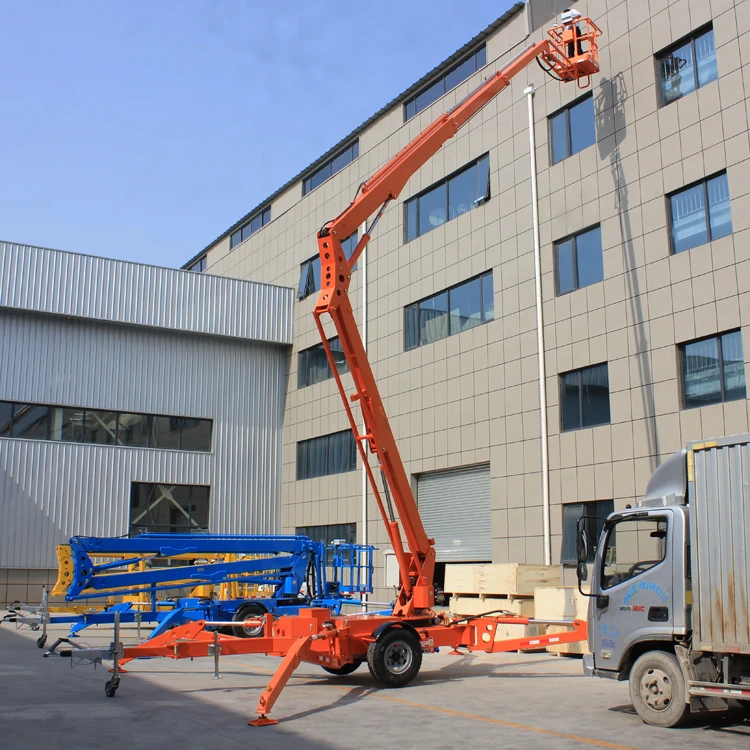
At our company, we offer a wide range of indoor boom lifts with state-of-the-art communication systems. Whether you need a Drivable Boom Lift for easy maneuverability, a Rough Terrain Boom Lift for more challenging surfaces, a Small Boom Lift for tight spaces, or a Tow Behind Boom Lifts for portability, we've got you covered. And of course, our Indoor Boom Lift models are specifically designed for indoor use, with communication systems that are reliable and easy to use.
The Importance of Choosing the Right Communication System
When choosing an indoor boom lift, it's important to consider the communication system. A good communication system can enhance the safety and efficiency of your operations. Make sure to look for a system that's reliable, easy to use, and compatible with your existing equipment.
Also, consider the level of support and training that the supplier offers. A knowledgeable supplier can help you choose the right communication system for your needs and provide you with the training and support you need to operate it safely and effectively.
Contact Us for More Information
If you're interested in learning more about our indoor boom lifts and their communication systems, or if you're ready to make a purchase, don't hesitate to contact us. We're here to answer all your questions and help you find the perfect solution for your needs.

References
- Industry reports on boom lift technology
- Manufacturer's manuals for indoor boom lifts
- Safety standards and guidelines for construction equipment


