


When it comes to the world of aerial work platforms, the compact boom lift stands out as a versatile and essential piece of equipment. As a leading supplier of compact boom lifts, I often encounter a common question from our customers: "What is the maximum weight capacity of a compact boom lift?" In this blog post, I'll delve into this topic, providing you with a comprehensive understanding of the factors influencing weight capacity and the typical ranges you can expect.
Understanding the Basics of Compact Boom Lifts
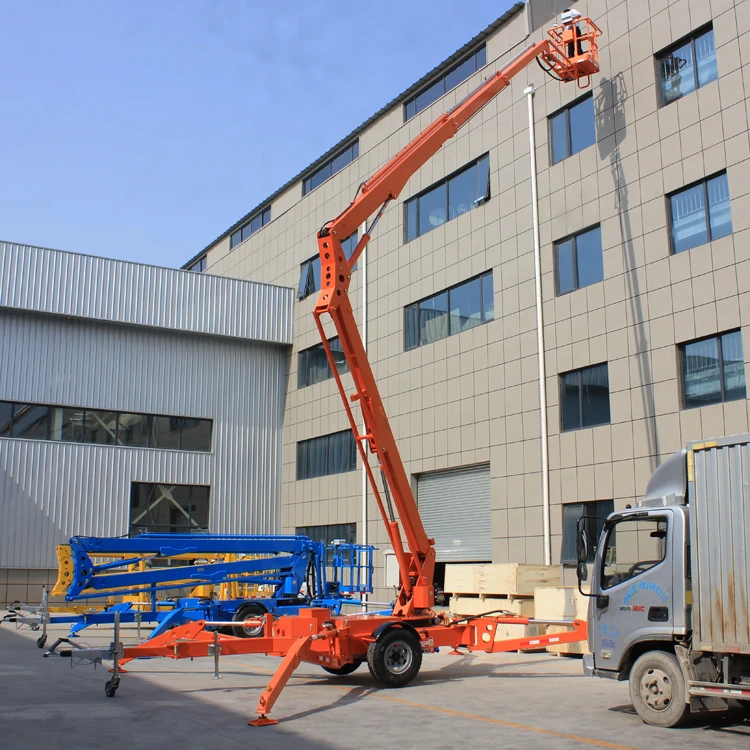
Before we discuss weight capacity, let's briefly review what a compact boom lift is. Compact boom lifts are designed to provide access to elevated work areas in tight spaces. They are characterized by their relatively small size, maneuverability, and the ability to reach heights that might otherwise be difficult to access. These lifts come in various types, including Self Propelled Boom Lift, Rough Terrain Boom Lift, Tow Behind Boom Lifts, Drivable Boom Lift, and Single Man Boom Lift. Each type has its own unique features and applications, which can also affect its weight capacity.
Factors Affecting the Maximum Weight Capacity
The maximum weight capacity of a compact boom lift is not a fixed number but is influenced by several key factors:
1. Design and Construction
The design and construction of the boom lift play a crucial role in determining its weight capacity. Manufacturers use different materials and engineering techniques to build these lifts. High - strength steel is commonly used in the construction of the boom and other structural components. The thickness of the steel, the type of welds, and the overall structural integrity all contribute to how much weight the lift can safely carry. For example, a lift with a more robust and well - engineered boom structure will generally have a higher weight capacity.
2. Boom Configuration
The configuration of the boom, including its length, angle, and articulation, also affects the weight capacity. As the boom extends further or is raised to a steeper angle, the weight capacity typically decreases. This is because the extended boom creates a greater lever arm, which puts more stress on the lift's structure. Articulating booms, which have multiple joints and can bend in different directions, may also have different weight capacity profiles compared to straight booms.
3. Stability
Stability is a critical factor in determining weight capacity. Compact boom lifts are equipped with various stability features such as outriggers, which provide additional support. The design and spread of the outriggers, as well as the overall base width of the lift, impact how much weight it can safely handle. A lift with a wider base and properly deployed outriggers will generally have a higher weight capacity than one without these stability features or with a narrow base.
4. Safety Standards and Regulations
Safety standards and regulations set by organizations such as the Occupational Safety and Health Administration (OSHA) in the United States and the European Union's Machinery Directive also influence weight capacity. Manufacturers must design and test their lifts to meet these standards, which often include safety margins to ensure the well - being of operators and the public.
Typical Weight Capacity Ranges
The weight capacity of compact boom lifts can vary widely depending on the factors mentioned above. Generally, the weight capacity of a single - man compact boom lift can range from 200 to 300 pounds (90 to 136 kilograms). These lifts are typically designed for light - duty tasks such as maintenance, painting, and installing signage.
For larger compact boom lifts that can accommodate multiple operators or heavier equipment, the weight capacity can be significantly higher. Some models can support up to 1,000 pounds (454 kilograms) or more. These lifts are often used in construction, industrial maintenance, and other applications where more weight needs to be lifted to elevated positions.
It's important to note that these are just general ranges, and the actual weight capacity of a specific compact boom lift model should be determined by referring to the manufacturer's specifications. These specifications will provide detailed information about the lift's weight capacity under different operating conditions, such as boom length and angle.
Importance of Adhering to Weight Capacity Limits
Adhering to the weight capacity limits of a compact boom lift is of utmost importance for several reasons. Firstly, it is a matter of safety. Overloading a boom lift can cause it to become unstable, increasing the risk of tipping over. This can result in serious injuries or even fatalities to the operators and bystanders.

Secondly, operating a boom lift beyond its weight capacity can cause damage to the lift itself. Excessive stress on the boom, structure, and other components can lead to premature wear and tear, structural failures, and costly repairs.
Finally, violating weight capacity limits can also lead to legal issues. If an accident occurs due to overloading a boom lift, the operator and the employer may be held liable for damages and may face fines and penalties.
Determining the Right Weight Capacity for Your Needs
When choosing a compact boom lift, it's essential to determine the right weight capacity for your specific needs. Consider the following factors:
1. Number of Operators
If you plan to have multiple operators on the lift at the same time, you'll need to choose a lift with a higher weight capacity. Calculate the combined weight of all operators and add some extra margin for safety.
2. Equipment and Materials
In addition to the operators, you may need to carry tools, equipment, and materials on the lift. Make sure to account for the weight of all these items when determining the required weight capacity.
3. Task Requirements
The nature of the task you'll be performing can also influence the weight capacity you need. For example, if you're lifting heavy construction materials to a high elevation, you'll need a lift with a higher weight capacity than if you're just performing routine maintenance tasks.
Conclusion
In conclusion, the maximum weight capacity of a compact boom lift is influenced by various factors, including design, boom configuration, stability, and safety standards. Typical weight capacity ranges can vary from 200 to 1,000 pounds or more, depending on the model and its intended use. Adhering to weight capacity limits is crucial for safety, equipment longevity, and legal compliance.
If you're in the market for a compact boom lift and need help determining the right weight capacity for your needs, or if you have any other questions about our products, we're here to assist you. Contact us to start a discussion about your specific requirements and how our compact boom lifts can meet them.
References
- "Aerial Work Platforms: Design, Safety, and Maintenance," Industrial Press Inc.
- OSHA Standards for Aerial Work Platforms.
- Manufacturer specifications of various compact boom lift models.


