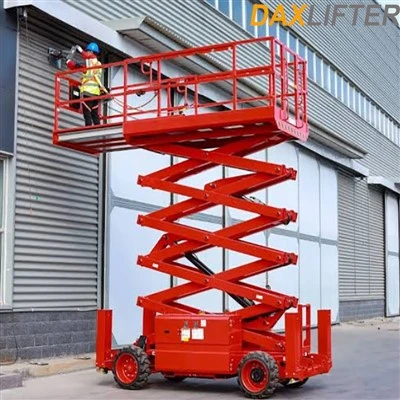
A scissor lift is a self-propelled access platform that elevates personnel and equipment using a crisscrossing beam mechanism, similar to the motion of a pair of scissors.
These machines support various tasks at height, such as installing signs, performing ceiling work, maintaining lighting, or handling outdoor projects like bricklaying, tree care, and utility line maintenance.

How High Can a Scissor Lift Reach?
Available in multiple sizes, scissor lifts typically offer working heights from 19 to 50 feet (about 5.8 to 15 meters). Compact units are more maneuverable but have lower load ratings, while larger models provide greater capacity at the expense of mobility. For instance, a 50‑foot lift can often support up to 2,250 pounds.
Common Uses
Scissor lifts serve diverse settings, including construction sites, warehouses, and film studios.

- Ceiling Work: Schools, hospitals, hotels, and factories employ them for installing or servicing lighting, cabling, ductwork, and for painting or repairing high ceilings and walls.
- Electrical Maintenance: Their stability makes them well‑suited for safely working near power lines.
- Sign Installation: Useful for mounting both indoor and outdoor signage, from construction‑site warnings to commercial store signs.
- Maintenance & Repairs: Ideal for inspecting machinery, servicing HVAC systems, or fixing elevated structures.
- Warehousing: Assist with inventory management, pallet handling, shelf access, and general facility upkeep like light‑fixture replacement.
- Event & Media Production: Provide photographers, videographers, and artists with elevated vantage points for shooting or creating large‑scale works.
Selecting the Right Scissor Lift
Consider these factors when choosing a model:
- Working Height: Determine the necessary elevation; options range from 19 to 50 feet.
- Platform Size: Standard or extended platforms are available. Ensure the chosen size maintains proper load distribution.
- Work Environment: Indoors often require electric, zero‑emission models with non‑marking tires. Rough outdoor terrain may necessitate a four‑wheel‑drive unit.
- Load Capacity: Account for the combined weight of workers, tools, and materials. Heavier loads demand a higher‑capacity lift.
- Task Requirements: Ceiling work may prioritize height, while warehouse operations might value maneuverability more.
Example Specifications
- 19‑ft Electric: Zero‑emission, ideal for indoor sign‑hanging, ceiling work, and maintenance. Its spacious deck suits teams.
- 26‑ft Electric: Suitable for indoor/outdoor tasks like ceiling repair, sign installation, or tree trimming. Less ideal for very confined spaces.
- 26‑ft Off‑Road: Shares the height of the electric model but features 4WD for slopes and rough ground. Offers triple the load capacity for industrial applications.
- 40‑ft Off‑Road (4WD): A robust outdoor model with interlocking beams, providing a stable platform for multiple workers on rugged terrain.
Types of Scissor Lifts

- Electric Models: Quiet, emission‑free, and easy to maneuver on flat indoor surfaces. Perfect for interior maintenance, window cleaning, and lighting projects.
- Off‑Road Models: Built with 4WD for outdoor construction and industrial sites with uneven or unpaved ground.
Scissor Lifts vs. Boom Lifts
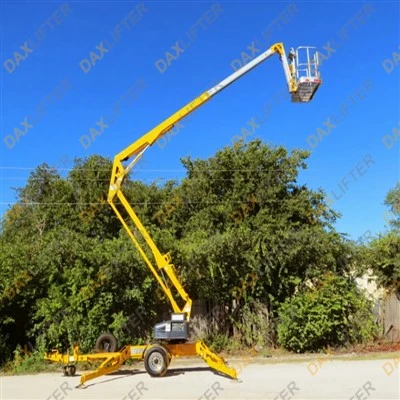
While both provide aerial access, they differ in movement and application. Boom lifts use a hydraulic arm to position a small platform, offering both vertical and horizontal reach, plus rotation. Selection depends on project needs and site constraints.
- Height: Boom lifts generally reach much higher-sometimes over four times the maximum height of a scissor lift.
- Direction: Scissor lifts move only vertically; boom lifts can extend horizontally and articulate around obstacles.
- Capacity: Scissor lifts often have higher load ratings (up to 2,250 lbs) compared to typical boom‑lift capacities (around 500 lbs).
- Terrain: Both come in rough‑terrain variants, though boom lifts are more common for extreme off‑road conditions.
- Cost: Boom lifts are usually more expensive to rent or purchase.
Operator Training
While formal certification is not mandated, employers must provide thorough training on safe operation, material handling, and hazard recognition. Ensuring workers are properly instructed is a key employer responsibility.
Safety Guidelines
- Guardrails: Always use properly installed guardrails. Stand only on the platform, not on rails, and avoid excessive leaning.
- Stability: Operate on firm, level surfaces. Outdoor use should avoid winds over 28 mph (45 km/h). Follow manufacturer guidelines for movement.
- Placement: Keep at least 10 feet (3 meters) from power sources and clear of overhead hazards. Establish traffic controls to prevent collisions when working near other vehicles or equipment.
Interested in learning more about aerial work platforms? Contact us today!