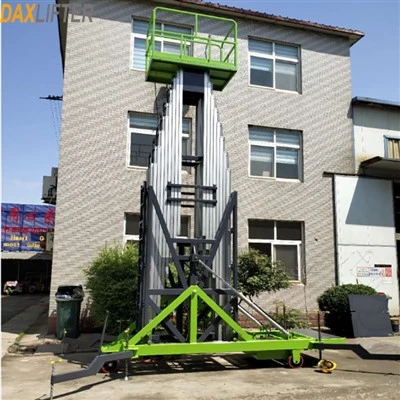
Can Tow‑Behind Boom Lift Handle Rough Terrain? Practical Operation Tips & Selection Guide
When purchasing aerial work equipment for construction sites with complicated ground conditions, you will frequently encounter potholes, gravel‑strewn ground and muddy surfaces. Whether a tow‑behind boom lift can cope with rough terrain is a critical consideration for many buyers. Drawing on years of equipment supply experience and real‑world on‑site performance data, this article discusses its applicable scenarios, hardware strengths, inherent limitations and essential safety operating guidelines based on actual job‑site conditions.
First, let's clarify what rough terrain covers: uneven pitted ground, muddy water‑logged yards, rocky gravel ground and sloped work zones all fall within this category. Such environments place heavy demands on aerial equipment. Ground traction, overall machine stability and cross‑country mobility directly determine whether aerial assignments can proceed safely.
Core Hardware Advantages Of Tow‑Behind Boom Lift For Complex Terrain
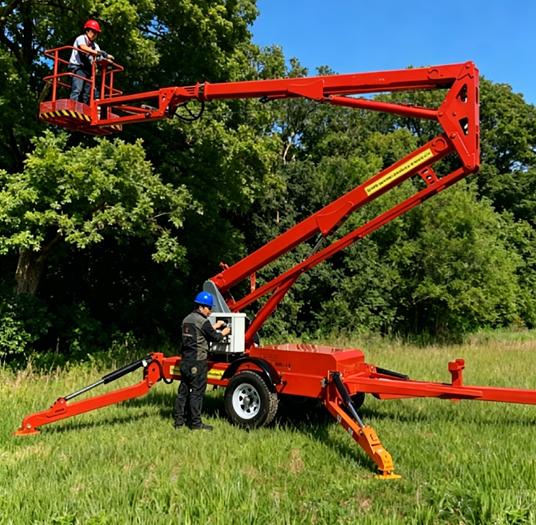
The most prominent feature of a tow‑behind boom lift is excellent transport flexibility. Its trailer‑mounted design allows hooking up to a truck for fast towing transit to different work locations. Compared with large self‑propelled aerial machinery, it delivers superior site adaptability. Units can be mobilised quickly even on under‑developed sites with undulating ground.
Nevertheless, actual performance on bumpy ground heavily relies on factory hardware configurations. Heavy‑duty large‑size tyres serve as the base specification. Their broad tread contact area improves ground traction, lowering risks of wheel‑spin, getting stuck and platform wobble when working on potholed or slippery surfaces.
Next comes shock‑absorbing suspension assemblies. Similar to off‑road vehicle suspension logic, high‑quality tow‑behind boom lifts are fitted with dedicated suspension systems to damp jolts and vibration during transit. It enables smoother relocation, mitigates continuous shock loads and reduces component fatigue to extend overall service life.
Selected models feature increased ground clearance. They can roll over scattered gravel, small construction debris and protruding rocks without undercarriage scraping or chassis jamming incidents.
Inherent Limitations: Not All Rough Sites Are Suitable For Direct Operation
Even so, tow‑behind boom lifts are not all‑terrain universal machinery. They have clear operating boundaries for extremely hostile ground conditions. Sites with deep mud or deep rutted wheel tracks may still result in wheel slippage and complete entrapment despite large tyres; these locations are not fit for direct machine deployment.
Working gradient represents another hard safety limit. Most models can manage gentle inclines, yet steep slopes sharply raise overturning hazards. Always consult the original manufacturer manual and strictly abide by the maximum allowable working slope specified by OEM specifications. Never operate beyond rated gradient limits.
Model Selection For Different Rough‑Terrain Working Conditions
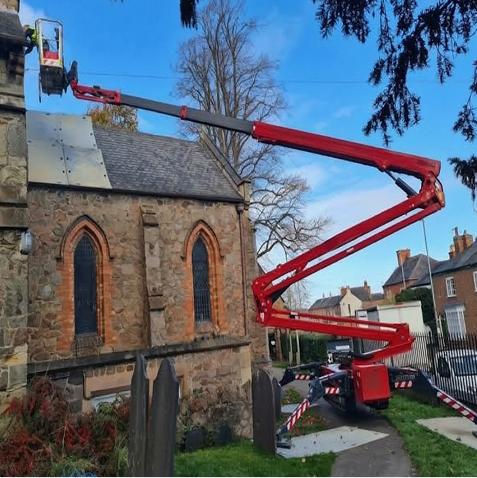
We supply multiple tow‑behind aerial work platform variants for diverse site conditions. For compact work zones dominated by medium‑scale aerial assignments, compact‑bodied units maintain sufficient working height and can operate effectively within confined spaces.
If you prioritise environmental‑friendly performance alongside rough‑terrain travelling capability, electric cherry picker variants are the right choice. Electric units run with low noise and produce zero exhaust emissions, well‑suited for indoor spaces and enclosed construction sites with strict emission requirements. Optimised control systems enhance machine stability while operating over uneven ground surfaces.
Critical Safety Operating Rules For Rough‑Terrain Work
Safety must be the top priority for poor‑ground‑condition sites. Operators shall complete full pre‑start machine inspection before commencing work. Inspect tyres for cuts or bulges, verify proper suspension performance, and test all lifting and travel controls. Do not deploy the unit until all faults are ruled out.
Levelling outriggers and stabilisers become especially vital on uneven ground. Deploy outriggers to bring the entire chassis into true horizontal position as the fundamental safety foundation. Furthermore, operators must receive complete hands‑on training and fully understand operating best‑practices for complicated ground environments. Avoid reckless operation based purely on past experience.
Real‑World Project Case Feedback
From completed project records, many customers report that tow‑behind boom lifts deliver dependable performance under moderately rough conditions and solve aerial‑work access challenges which conventional machinery cannot handle.
One customer took on forest vegetation‑clearing projects with rocky, potholed woodland ground. Our 10‑20 m tow‑behind boom lift completed site‑to‑site transit smoothly over complex forest terrain, reached target working heights safely and finished tree pruning and removal without major equipment breakdowns throughout the whole project.
Another building‑renovation project featured muddy, gravel‑mixed construction yards. The customer selected an electric tow‑behind aerial work platform. It satisfied site environmental‑protection requirements, while reinforced suspension and traction assemblies enabled flexible manoeuvring inside cluttered building premises and matched real‑world site constraints perfectly.
Summary & Procurement Advice
Returning to the core question: can a tow‑behind boom lift work on rough terrain? The short answer is yes - but with clear prerequisites. For common moderately undulating, gravel‑covered or lightly muddy construction‑site conditions, selecting the correct model plus following strict safety protocols creates a cost‑effective aerial‑work solution. However, exercise great caution for sites featuring deep mud or steep slopes; do not force machine operation.
If you intend to deploy tow‑behind boom lifts on rough ground, sort out your actual site parameters first: ground surface condition, required working height and project budget, then compare specifications to pick suitable machinery. Our technical‑sales team can provide real‑world performance references for different models under complex‑terrain conditions and help you match appropriate equipment.
From product design to manufacturing, we enforce strict quality control for every detail. Our product portfolio meets high‑altitude high‑efficiency demands for straight boom lifts and flexible multi‑condition assignments for articulated boom lifts. Whether for professional engineering construction, logistics‑warehouse operations or diverse aerial‑work requirements, we target your core operational goals to simplify workflows and raise overall job‑site productivity.
Full‑range worry‑free support for safe equipment operation
-
Professional consultation: One‑on‑one dedicated service covering product enquiry, scenario‑based selection guidance and on‑site installation support to help you choose well‑matched equipment.
-
After‑sales protection: Fast‑response maintenance and fault troubleshooting. Our specialist technical team provides continuous follow‑up to keep your machinery running reliably.
-
Custom‑tailored solutions: Custom‑built equipment and quotations according to your working‑height, environmental complexity and power‑source requirements for improved cost‑efficiency.
Request Custom Tow‑Behind Boom Lift Project Solutions From DAXLIFTER
WhatsApp / Phone: +86 15192782747
Email: sales@daxlifter.com
Share your site‑terrain, working‑height and payload requirements, and receive detailed datasheets plus exclusive project quotations!