Telescopic Vs Articulated Boom Lift: How To Choose Construction Aerial Work Platforms
Aerial work lifts serve as core machinery for elevated‑height assignments. They are widely deployed for exterior wall painting, tile installation, curtain‑wall fitting, steel‑structure welding and many other building‑site tasks. By structural classification, common models on the market include scissor lifts, telescopic boom lifts, articulated boom lifts and spider lifts. Within construction projects, telescopic boom lifts and articulated boom lifts see the heaviest utilisation. Each has distinct performance trade‑offs, so equipment selection must be based on real‑world site conditions.
8 Key Practical Differences Between Telescopic Boom Lift And Articulated Boom Lift
1. Boom Structure
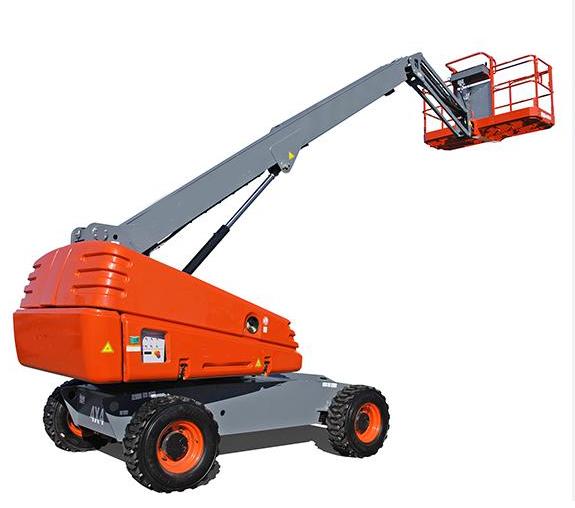
Telescopic boom lift: Built with U‑shaped one‑piece single‑weld boom construction, similar to the main boom on a mobile crane. Multiple nested boom sections extend sequentially to expand working outreach. It delivers good boom concentricity, high structural rigidity and precise guidance, providing outstanding overall machine stability during operation.
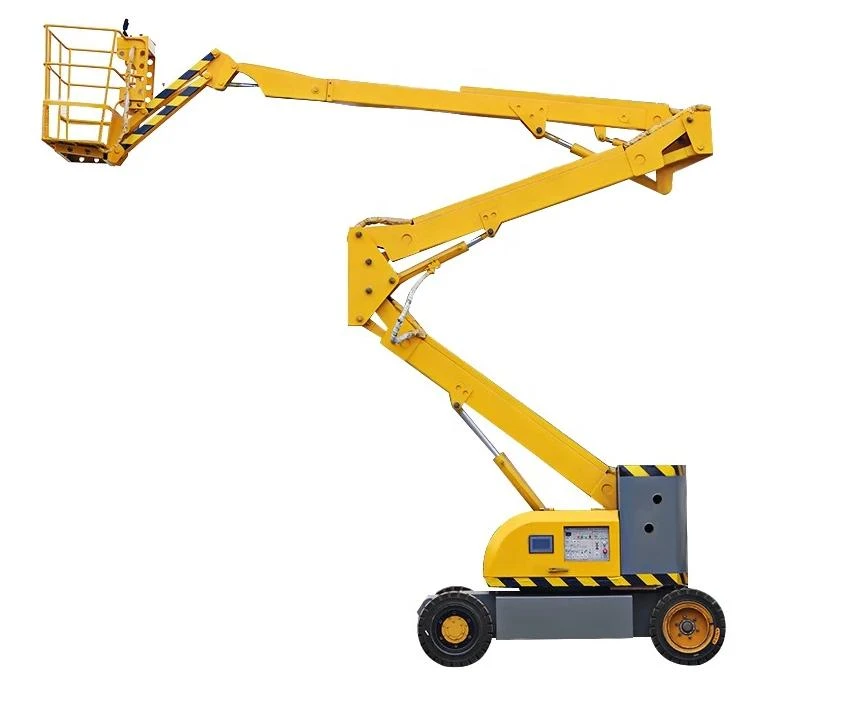
Articulated boom lift: Features multi‑joint boom assemblies driven by several hydraulic cylinders, with mechanics comparable to the placing boom on a concrete pump truck. Each boom segment can bend and pivot independently. Operators adjust boom profiles to trace complex movement trajectories and reach target work‑points around obstructions.
2. Working Height
Telescopic boom lift: Excels at maximum reach. Mainstream commercial units offer working heights above 56 metres. The wide adjustable height range covers demanding high‑rise building and large‑venue construction assignments.
Articulated boom lift: Standard models reach roughly 41 metres maximum working height; premium high‑spec variants can hit up to 48.6 metres. It targets mid‑to‑high‑altitude work and satisfies height requirements for most general building‑construction projects.
3. Lifting & Operating Speed
Telescopic boom lift: Simple boom kinematics focus purely on extension and elevation with minimal auxiliary linkage motions. Boom deployment and retraction happen faster. It saves valuable man‑hours on open‑air job‑sites where construction progress is a high priority.
Articulated boom lift: Multi‑section linked boom mechanics demand sequential movements for full deployment and retraction. Complex mechanical layout results in comparatively slower cycle speeds. Its great obstacle‑clearing flexibility compensates for speed‑related shortcomings.
4. Site Compatibility
Telescopic boom lift: Best suited for open outdoor yards or large‑volume indoor spaces. The large chassis gives full play to its height and horizontal‑reach advantages. However, its straight boom cannot bend to bypass barriers, so target work‑points behind obstructions are often unreachable.
Articulated boom lift: Performs well across mixed indoor‑outdoor complex environments. Bendable boom segments manoeuvre past walls, structural members and on‑site equipment to access work surfaces. It delivers irreplaceable practical value on congested job‑sites filled with physical obstacles.
5. Power Configurations
Telescopic boom lift: Most units come factory‑fitted with diesel powertrains. Generous stable power reserves support heavy‑duty extended‑duration outdoor construction‑site operations.
Articulated boom lift: Dual‑power options are available. Lithium‑ion battery variants deliver low‑noise zero‑emission performance for indoor assignments and environmentally‑regulated projects. Diesel‑powered units supply robust output for harsh outdoor sites, widening overall application coverage.
6. Ground‑Surface Requirements
Telescopic boom lift: Must park upon firm, flat ground. Hardened pavement or compacted ground works best. Substrates need sufficient load‑bearing capacity to support dead weight plus platform payload. Soft muddy or heavily pitted ground is strictly forbidden to avoid sinking and overturning risks. Boom movements get automatically restricted if ground inclination exceeds 3° for operator safety.
Articulated boom lift: Also requires solid ground; keep clear of foundation pits and trenches. Even so, it tolerates minor ground undulations better than telescopic models, provided the substrate meets full load‑bearing requirements.
7. Operator Learning Curve
Telescopic boom lift: Intuitive operating logic, mainly boom extend‑retract plus raise‑lower actions. Low training threshold; operators can become productive after short hands‑on instruction.
Articulated boom lift: Every knuckle boom segment runs from independent hydraulic cylinders. Co‑ordinated multi‑action control calls for greater operator dexterity. It demands longer training cycles and benefits from rich practical on‑site experience.
8. Purchase & Rental Costs
Telescopic boom lift: Higher manufacturing costs. To achieve greater working height and outreach, booms, power packs and control assemblies demand tighter production tolerances. Higher capital expenditure translates to higher daily rental rates.
Articulated boom lift: Lower overall cost compared with equivalent‑spec telescopic boom lifts. Although knuckle‑joint mechanisms are complex, maximum height and outreach are limited, relaxing requirements for several components and delivering favourable total‑cost performance.
DAXLIFTER - Reliable Construction Aerial Work Platform Solutions
Whether you need heavy‑duty continuous operation on building sites or flexible obstacle‑avoiding performance for constrained‑layout locations, DAXLIFTER specialises in material‑handling and aerial‑work‑platform equipment. Our product development focuses squarely on real‑world on‑site pain‑points, prioritising stability, safety and efficiency. Strict quality checks run through R&D and assembly workflows. We supply telescopic boom lifts for high‑reach high‑productivity projects, alongside articulated boom lifts for obstacle‑rich confined job‑sites. Suitable equipment packages are available for engineering construction, warehouse maintenance and general aerial assignments to streamline workflows and boost construction‑site productivity.
-
Professional technical support: One‑on‑one consultation for product enquiries, site‑based selection advice and installation guidance to help you pick correctly‑specified machinery matching your project.
-
Comprehensive after‑sales protection: Fast‑response repair and fault resolution. Our technical team provides ongoing support to maintain consistent machine uptime.
-
Custom‑tailored solutions: Bespoke equipment configurations and quotations based on working‑height, site‑environment and power‑source requirements for better cost‑effectiveness.
Get Custom Construction Aerial Work Platform Quotations From DAXLIFTER
WhatsApp / Phone: +86 15192782747
Email: sales@daxlifter.com
Share your site conditions, required working height and payload requirements to receive detailed datasheets and exclusive project quotations!