In material‑handling and construction industries, well‑selected lifting equipment is essential for site safety and working efficiency. A wide range of lifting solutions are available on the market, among which scissor lifts and mast lifts are widely adopted. Built with different mechanical structures, they deliver distinct strengths and fit separate working scenarios. This article makes a full comparison to help you pick proper equipment for your business.
Before purchasing lifting equipment, it is critical to understand core strengths and applicable working conditions of different models. These two product lines are developed for differentiated environments. Whether you carry out indoor routine maintenance or large‑scale outdoor construction projects, you can find matching lifting solutions to support smooth site operations. Below we analyze their features, advantages and typical applications for better reference.
Scissor Lifts: Key Features & Advantages
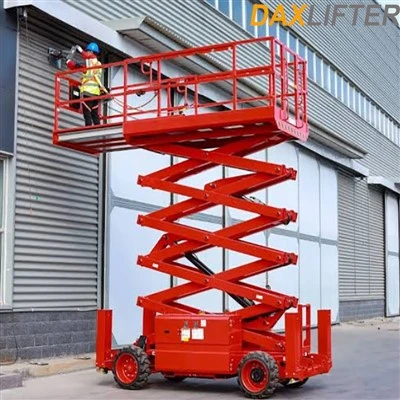
Scissor lifts achieve vertical lifting via cross‑scissor supporting structures to form stable aerial working platforms. Thanks to great versatility and solid build quality, they are widely used across many industries.
High versatility & reliable working efficiency Scissor lifts are multi‑purpose equipment, commonly seen on construction sites and inside warehouses. Various models with different load capacities and working heights are available to satisfy diverse requirements. They respond quickly during lifting and safely move operators, tools and materials to target working heights.
Strong load‑bearing performance Scissor lifts for auto‑repair workshops and industrial sites feature excellent load capacity. Robust frames support heavy vehicles and large‑size machinery, offering reliable backing for heavy‑duty assignments.
Stable operation with high safety level Safety is the top priority for aerial work. Scissor lifts come with wide base frames and proven scissor structures for high overall stability. Working platforms stay level throughout lifting cycles to reduce aerial‑operation risks. Most latest units are equipped with guardrails, anti‑slip platforms and emergency‑stop buttons for enhanced site protection.
Common types of scissor lifts
Electric scissor lifts: Low noise and zero exhaust emission. Preferred for indoor tasks such as interior renovation, building maintenance and warehouse service.
Diesel scissor lifts: Powerful output and good ground adaptability. Capable of travelling and working on uneven ground, ideal for outdoor construction and open‑air projects.
Compact scissor lifts: Small footprint and agile steering. Suitable for confined spaces including small warehouses and retail stores for inspection & repair work.
Mast Lifts: Key Features & Advantages
Also known as vertical mast working platforms, mast lifts are engineered for precise aerial operations in limited‑space areas. Vertical movement is realized by single or multi‑section extendable masts.
Compact footprint to save floor space Mast lifts feature small overall dimensions and perform well indoors. They easily pass through narrow aisles and standard doorways, perfect for maintenance tasks inside warehouses, shops and multi‑story buildings.
Easy operation & accurate height positioning User‑friendly control systems lower operation thresholds. Working height can be adjusted precisely, which fits scenarios requiring careful placement of tools and small‑sized equipment. Despite compact size, mast lifts cover abundant application scenarios including equipment service, warehouse rearrangement and indoor installation. Multiple working‑height and load‑capacity options are offered for varied demands.
Common types of mast lifts
Telescopic mast lifts: Equipped with extendable masts for greater working height, frequently used for building exterior maintenance and high‑altitude equipment installation.
Single‑operator mast lifts: Designed for one‑person aerial assignments. Operators carry tools for inspection and repair with great mobility.
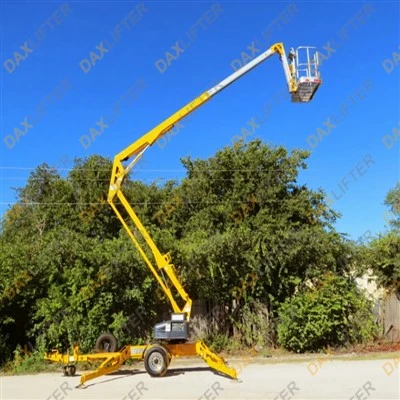
Mast articulated boom lifts: Combine vertical mast lifting and articulated‑boom flexibility. Vertical and lateral outreach enables access to hard‑to‑reach positions beyond ordinary lifting equipment.
Scissor Lift VS Mast Lift: Selection Comparison
Final equipment choice should be determined by site conditions and real‑world operational requirements.
Load capacity & stability Scissor lifts adopt wider base frames and scissor support structures. They deliver higher load capacity and better overall stability, more suitable for lifting heavy‑duty materials and large machinery. Mast lifts feature compact structures. Their main advantage lies in flexible movement in tight areas and they are more oriented toward light‑duty indoor aerial‑work.
Working height & outreach range Benefiting from telescopic mast structures, mast lifts reach higher vertical working points for high‑elevation assignments. Scissor lifts can also achieve considerable working height yet provide relatively limited horizontal outreach.
Site conditions & mobility If your site has narrow aisles and limited floor space with frequent movement demand, compact mast lifts bring more advantages. Scissor lifts provide stronger load‑capacity and stability, yet require larger operating clearance on site.
Summary
Scissor lifts and mast lifts have their own merits and serve totally different application scenarios. Clarify your site conditions and actual assignments before making purchasing decisions.
If you plan to upgrade site operations with lifting equipment, evaluate your requirements according to above comparison. Proper lifting equipment keeps your site running efficiently and safely.
Inquiry: WhatsApp / WeChat: +86 15192782747 Email: sales@daxlifter.com Feel free to contact us for product details and customized quotations.