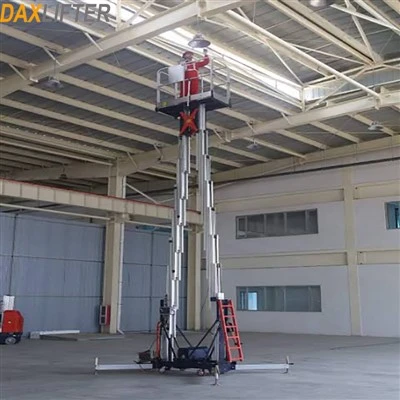
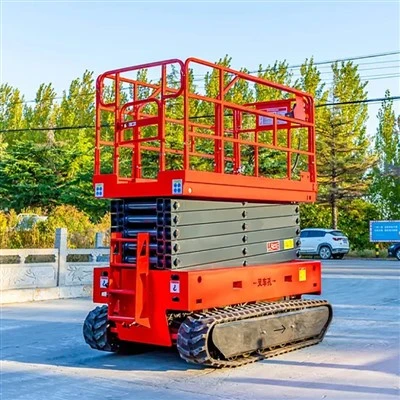
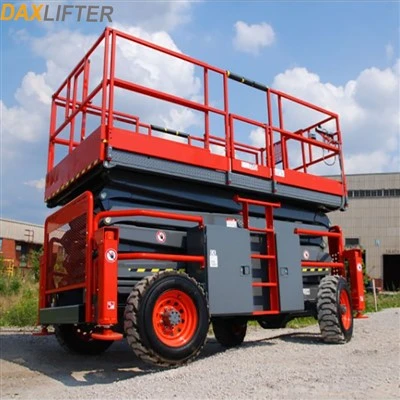
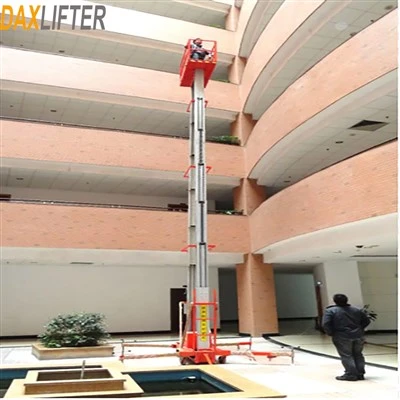
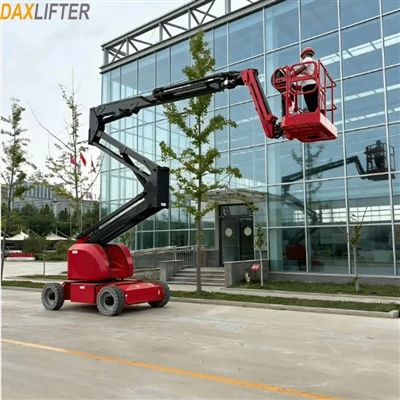
For building facade maintenance, municipal bridge inspection, power‑infrastructure servicing, venue upkeep and shipbuilding, overhead work is not merely lifting personnel aloft. The core challenge lies in safely positioning operators, hand‑tools and workflows at target work points across complex job‑sites, tight schedules and high‑risk environments. Traditional approaches rely on scaffolding, truck‑mounted platforms or simple elevating units. Though capable of basic elevation, they suffer from lengthy setup, poor mobility and heavy dependence on operator experience when dealing with tight layouts, irregular building geometries, frequent repositioning and short‑term inspection tasks.
Self‑propelled straight‑boom lifts integrate driving, telescopic boom movement, auto‑levelling and multi‑layer safety protection within one unit. They shift overhead operations from passively adapting to site constraints toward actively approaching work zones. For contractors, this translates into less preparatory assembly, faster relocation between points and more stable elevated operation. Construction workflows no longer need to build the whole site around machinery; instead, equipment moves to match job‑site requirements.
1. More than a simple elevator: an integrated mobile aerial work system
Many operators regard self‑propelled straight‑boom lifts merely as height‑raising platforms. In real‑world construction, they function as complete integrated aerial‑work solutions. Multi‑section telescopic booms, hydraulic drive, chassis travel assemblies and intelligent electronic controls work in synergy. Progressive boom extension, agile chassis steering and real‑time platform levelling enable seamless workflows from ground positioning through elevated task execution.
Take the common 26 m working‑height model as an example: full deployment from stowed configuration typically takes around 90 seconds. Operators are rapidly delivered to hard‑to‑reach zones including curtain‑wall surfaces, structural beams, pipe nozzles and bridge undersides. Its strengths extend beyond fast elevation: fine adjustments are still possible after reaching working height. The platform carries out minor displacement, angular correction and target alignment without repeated boom retraction, repositioning and re‑extension, cutting substantial cycle‑time waste.
Full‑proportional joystick controls deliver smooth travel, boom telescoping and platform movement. Experienced operators minimise mechanical shock, supporting precision‑demanding tasks such as curtain‑wall caulking, bolt alignment, pipe fitting and crack inspection. Especially during travelling‑while‑working, smooth, well‑modulated motion directly shapes site productivity and safety margins.
Auto‑levelling represents another vital yet frequently‑overlooked feature. Obvious platform tilt or sway at height compromises operator performance, raising risks of dropped tools, unstable material stacking and personnel loss‑of‑balance. Intelligent levelling keeps the basket consistently horizontal amid shifting boom angles, outreach and chassis attitudes, delivering a solid working base for site crews.
In confined‑space conditions, self‑propelled straight‑boom lifts excel via four‑wheel steering and crab‑mode travel. Tight‑radius turning and lateral side‑shift manoeuvres are realised within narrow corridors and built‑up construction zones, removing demand for the large slewing clearance required by truck‑mounted alternatives. This manoeuvrability often determines site access for downtown projects, aged‑building retrofits, indoor‑venue maintenance and ship‑yard workshops.
2. Core benefits: balanced gains in productivity, safety, site capability & load capacity
Selecting aerial‑work platforms means balancing safety, output, expenditure and site restrictions. Low‑priced basic units may appear attractive at first glance. Nevertheless, whole‑project‑cycle costs are governed by setup speed, relocation performance, safety features, failure rates and application coverage. Self‑propelled straight‑boom lifts achieve well‑rounded performance across these decisive dimensions, explaining their widespread adoption.
2.1 Enhanced productivity: not just rapid elevation
Productivity improvement begins with reduced preparation overhead. Scaffolding requires erection, acceptance and dismantling, consuming extensive labour and project duration. Conventional aerial machines, while scaffolding‑free, still cause delays if hampered by poor mobility, slow positioning or unstable operation.
Self‑propelled straight‑boom lifts drive under their own power for fast re‑positioning and close‑range alignment. Multiple sequential work points can be serviced without trailers or heavy lifting gear; operators drive directly onward to the next task. This continuous‑operation capability proves invaluable for fast‑track projects, short‑interval inspections, batch‑maintenance programmes and multi‑trade overlapping construction.
Take commercial‑complex facade maintenance as a practical illustration: tasks may include curtain‑wall cleaning, sealant renewal, perimeter inspection and lighting‑circuit servicing. Re‑setting equipment for every individual point generates major time‑loss. With straight‑boom units, boom extension, chassis displacement and platform rotation handle successive assignments within one broadly stable working setup.
2.2 System‑level safety protection beyond individual safeguards
Overhead safety cannot rely solely on safety harnesses and operator skill. Machinery must embed systematic hazard mitigation into hardware and operating logic. Self‑propelled straight‑boom lifts implement risk‑control at the equipment‑design stage.
Overload protection: platform overloading undermines overall stability and modifies stress distribution across booms, chassis and outriggers. Real‑time load‑monitoring triggers alarms and inhibits hazardous movements once rated capacity is exceeded, preventing operation under unsafe conditions.
Chassis stability: construction ground surfaces are rarely perfectly flat. Slopes, potholes and soft sub‑soils threaten machine steadiness. Anti‑tip chassis architecture plus optimised counterweight geometry mitigate risks originating from shifting centre‑of‑gravity, permitting reliable operation across moderately uneven terrain.
Dual‑redundant basket restraints: working platforms commonly adopt double‑lock safety chains for personnel. Dual‑barrier design follows overhead‑risk‑control principles: secondary protection provides backup should one component malfunction.
Emergency lowering: sudden power loss or hydraulic / control‑system faults risk trapping workers at height. Auxiliary power sources plus manual descent mechanisms smoothly return the basket to ground level, eliminating stranded‑operator hazards. Though seldom activated in daily shifts, this function is critical during unexpected breakdowns.
2.3 Terrain capability: the prerequisite for real‑world deployment
Impressive specification sheets count for little if machinery cannot enter, turn or stabilise on‑site. Self‑propelled straight‑boom lifts demonstrate strong adaptability to complex environments.
Four‑wheel‑drive together with foam‑filled anti‑puncture tyres boost traversal over dirt tracks, muddy ground, rutted surfaces and temporary site roadways. Where machines cannot drive directly onto work zones, extra ground‑levelling, steel‑plate laying and construction‑sequence revision become mandatory, adding both time and expense.
Wireless remote control further elevates site flexibility. Ground‑station operators manage travel, steering and preliminary alignment remotely. Frequent ascending‑descending cycles decrease, while equipment attitude and surrounding obstacles are observed from a safer vantage point. Remote operation aids positioning within narrow passages, dense pipe‑rack zones and multi‑trade active construction sites.
2.4 High‑capacity basket supporting multi‑person crews plus tools & materials
Overhead assignments require more than lifting personnel. Operators frequently carry hand‑tools, consumables, small plant and spare‑parts. Small‑size, low‑payload platforms force repeated ground‑to‑height trips and cripple productivity.
Baskets for self‑propelled straight‑boom lifts adopt high‑strength alloy construction delivering rigidity, wear‑resistance and deformation resistance. Ample platform footprint together with substantial rated load accommodates several operators alongside necessary tools and materials. For curtain‑wall installation, plant inspection, pipe‑network modification and bridge coating, crews complete longer continuous work sequences with reduced dependence on ground‑support teams.
For contractors, one machine covers diversified task categories. Subject to matching working height, outreach and payload, the unit applies to building construction, municipal servicing, power‑asset maintenance, venue‑management, bridge diagnostics and shipbuilding. Broader applicability lowers equipment idle‑time.
3. Practical field value: solving tangible construction challenges instead of pursuing maximum height
True equipment performance is measured not by datasheet parameters, but by site accessibility, proximity to work points and low‑impact operation. Below‑mentioned scenarios best demonstrate real‑world value of self‑propelled straight‑boom lifts.
Scenario 1: Facade maintenance for urban landmark buildings High‑end hotels, mixed‑use commercial centres and exhibition complexes feature extensive glass curtain‑walls, metal cladding, stone panels and architecturally‑complex profiles. Projects demand careful finished‑surface protection, minimal disruption to pedestrian flows and commercial activities, and discourage large‑scale scaffolding deployment.
Self‑propelled straight‑boom lifts position on roadways or podium rooftops. Telescopic booms and rotating baskets traverse beams, decorative mouldings, overhangs and curtain‑wall assemblies, reaching cleaning, inspection or replacement locations directly. Compared with legacy workflows, they exert less impact on facades and satisfy strict requirements for site‑safety, finished‑goods safeguarding and site order for premium high‑rise properties.
Scenario 2: Routine inspection of urban viaducts The principal difficulty for elevated‑highway servicing lies not in gaining height, but in minimising lane‑closure durations and traffic disruption. Slow‑to‑position, hard‑to‑relocate equipment occupies carriageways for extended periods, causing congestion and elevated public‑cost burdens.
Compact‑bodied straight‑boom lifts set‑up beside viaduct edges, within emergency lanes or behind limited hoarding. They rapidly access crack‑checking points, guardrail‑repair zones, coating‑maintenance stations and bearing‑inspection locations, then withdraw promptly upon completion. Municipal‑maintenance teams achieve better balance between construction progress and urban‑traffic continuity.
Scenario 3: Overhead equipment fitting within shipyards Ship‑hall layouts are highly complex, with intersecting hull blocks, steel structures, pipe‑runs, foundation‑beds and lifting gear complicating large‑machinery access and alignment. Overhead heavy‑component installation calls for both stable elevation and precise positioning; unstable machine movements endanger fitting accuracy and site safety.
Thanks to compact chassis, four‑wheel steering and crab‑travel modes, self‑propelled straight‑boom lifts navigate constrained workshop aisles. Personnel, tools and heavy fittings are delivered to designated elevations. Their merit is not limited to vertical lifting, but delivering steady, accurate, controllable overhead assembly motions amid congested manufacturing environments.
4. Industry trends: electrification and digital intelligence reshape aerial‑work practices
Growing urban‑construction standards transform aerial‑work platforms from basic construction machinery toward eco‑friendly, smart, easily‑managed working systems. Electric powertrains represent a major upgrade path, bringing zero emissions, low noise and reduced vibration, making them suitable for indoor premises, residential districts and commercial venues.
Exhaust‑gas and noise controls represent key urban‑construction compliance points. Fossil‑fuel‑driven units face increasing usage‑restrictions within sensitive zones. Battery‑powered self‑propelled straight‑boom lifts fulfil green‑construction specifications and mitigate disturbance to residents, retail operators and road‑traffic. For enterprises undertaking municipal contracts, urban‑renewal schemes and commercial projects, electric configurations deliver practical site‑access capability rather than mere marketing features.
Intelligent control systems achieve enhanced stability and diagnostic transparency. CAN‑bus and PLC controls enable highly repeatable machine motion while logging comprehensive operational datasets. Remote fault‑diagnosis and real‑time condition‑monitoring assist maintenance crews in detecting anomalies pro‑actively, shortening on‑site troubleshooting and reducing schedule‑disruption caused by unexpected failures.
Market demand for aerial‑work equipment keeps expanding. Building‑construction, municipal‑asset care, power‑network servicing, venue‑upkeep, bridge‑assessment and ship‑building continuously call for safer, more productive and more flexible overhead‑work solutions. Future competition will focus less on maximum working height and more on stable, intelligent, low‑maintenance performance under complex operating conditions.
Overhead‑work machinery turns complex elevation into controllable processes
For building contractors, aerial‑platform selection equates to selecting risk‑mitigation and productivity‑enhancement methodologies. A quality self‑propelled straight‑boom lift does not simply lift workers upwards. Through reliable travel, precise boom extension, consistent auto‑levelling and multi‑layer safety architecture, the whole overhead‑operation workflow becomes predictable and controllable.
DAXLIFTER specialises in aerial‑work equipment, focusing on real‑world‑site productivity, safety and spatial‑adaptation challenges. Whether for facade upkeep, municipal‑bridge inspection, power‑infrastructure maintenance, venue servicing, ship‑building or industrial installation, model selection must match working height, ground‑site conditions, payload requirements and construction rhythms.
While evaluating aerial‑work machinery, assess these practical criteria: rapid positioning performance, reliable traversal across complicated terrain, systematic safety safeguards, multi‑crew operational support and convenient after‑sales servicing. The optimal machine for your project is not necessarily the highest‑spec unit on paper, but the one minimising overhead hazards and maximising construction‑site efficiency.
DAXLIFTER Contact: Tel / WhatsApp: +86 15192782747 Email: sales@daxlifter.com